


This is Volume I: The Architect of Patience, part of the Leadership Archetypes Series, alongside The Agitator, The Reformer, The Visionary, and those still to come.
In 1925, A. Philip Randolph took on a mission everyone told him was impossible: to unionize the Black Sleeping Car Porters—men who worked brutal hours for poverty wages on Pullman railway cars, completely dependent on tips and trapped in a system designed to keep them subservient.
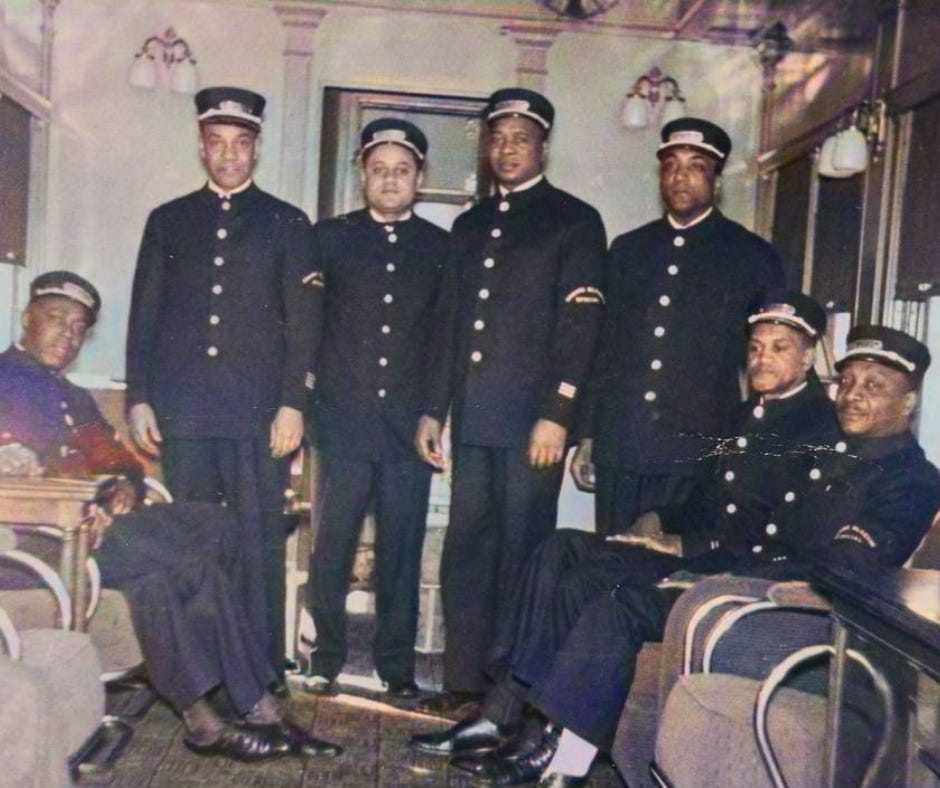
This was post-Reconstruction America. The South had responded with Jim Crow—the legal architecture of segregation. Meanwhile, the industrial North took a different approach. In Chicago, George Pullman built his railcar empire on a system just as insidious, though without the explicit laws. Pullman constructed something that was union-proof from the ground up. He built company towns that were essentially controlled housing, set wages so low that workers depended entirely on their tips to make a living wage. Overall, Pullman's business plan relied on economic dependency that made socio-economic growth nearly impossible.
As a result, you have a growing number of Black Porters ready to strike immediately after years of degradation. The Pullman Company responded with harassment, firings, company spies infiltrating their meetings, basically every incitement and union-busting tactic in the book. After all, Pullman knew something crucial about labor organizing: a strike before you have the infrastructure, public support, and legal protection leads nowhere.
Randolph understood this tactic, knowing that a premature strike could destroy credibility and set the movement back. Nearly a century later, leaders face the same dilemma in different clothes: speed masquerading as strategy, and noise mistaken for movement.
Critics called him too cautious; rivals promised faster results. And for twelve years, Randolph refused to take the bait. His patience wasn’t passive; it was infrastructural. He wasn’t waiting for change; he was building its conditions.
Strategic Foundation in Today’s Market
Now, let’s think about your strategic leadership in today’s marketplace.
The job market and pundits may have you ready to panic with various industries in flux. AI is rewriting job descriptions faster than HR can post them. Mass layoffs are a reality and making continuous headlines. Organizational restructures get announced on Monday and reversed by Thursday. And everywhere you look, someone’s telling you that you need to react—pivot faster, skill up immediately, make the bold move now.
In reality, the trap isn’t the disruption itself. The trap is thinking you need to quickly react to change.
But what if there’s a different way of being and making moves available to you? A way that ultimately builds something that outlasts the crisis entirely, the Randolph way.
What Randolph Actually Built
While other unions were making headlines with strikes and boycotts and public battles, the Brotherhood of Sleeping Car Porters under Randolph’s stewardship was organizing. Filing paperwork. Building relationships and infrastructure, as well as creating newspapers to control the narrative and keep members informed. They set up legal defense funds to protect fired workers. Built alliances with other unions, churches, and civil rights organizations. He cultivated political relationships that would matter when legislation came up for a vote.
And he waited—strategically, patiently—for the right legislative moment. In 1926, Congress passed the Railway Labor Act, which protected workers’ right to organize—but only if they could prove they had legitimate support from their members.
Randolph spent the next eleven years building that coalition of proof, and in 1937, the Brotherhood won union recognition.
Randolph’s Blueprint, Lasting Impact
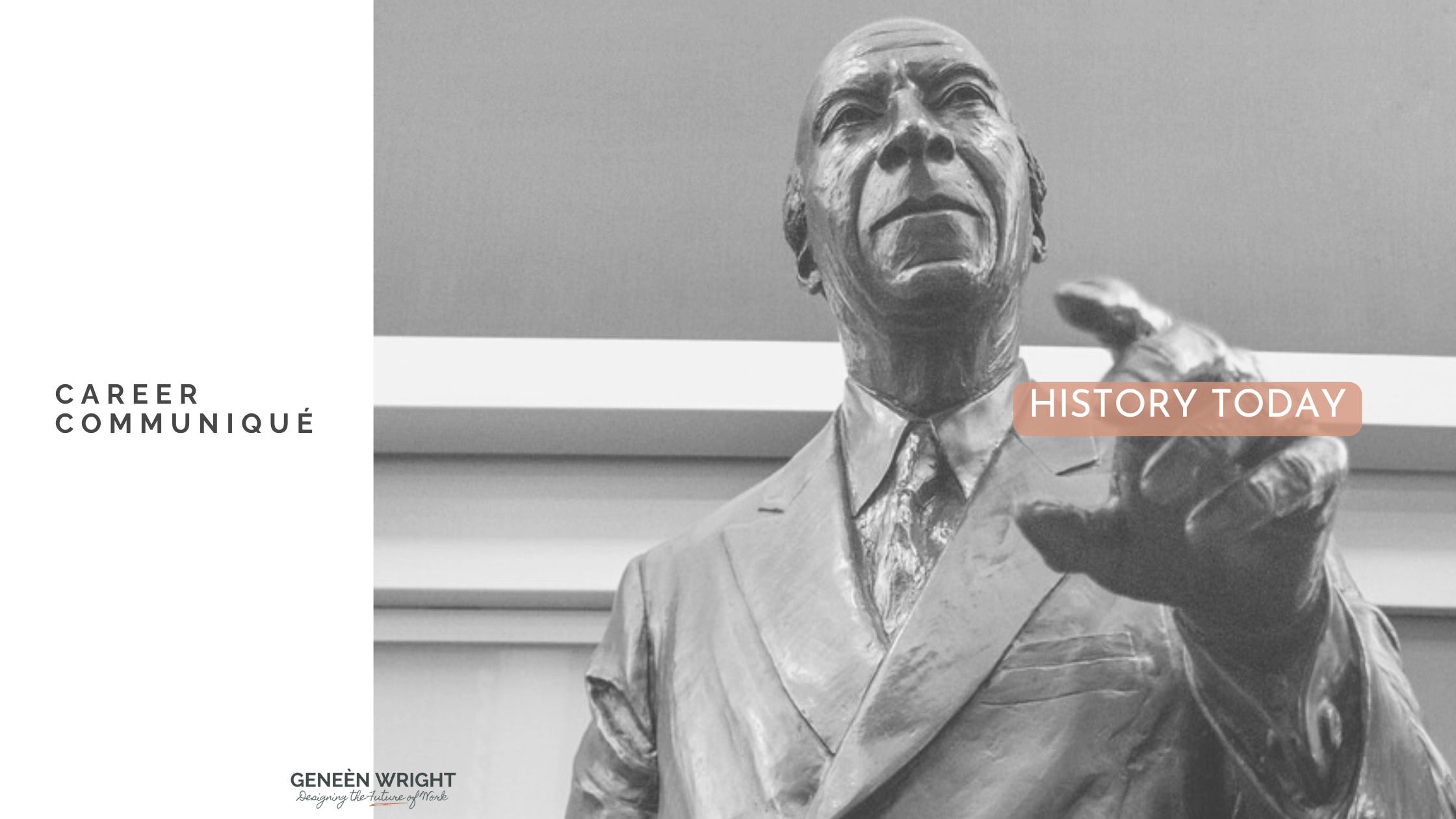
Through careful and strategic cultivation, Randolph created a Blueprint and a foundation by which he and other leaders could build on as the work continued. In 1941, Randolph successfully lobbied President Franklin D. Roosevelt to issue Executive Order 8802, which banned racial discrimination in the national defense industry—the first federal action on civil rights in decades. The March on Washington in 1963? The BSCP organized it. The political infrastructure that later supported the Montgomery Bus Boycott, the Freedom Rides? Randolph’s people built that architecture. He created an organizational model that would be replicated across industries. A political network that shaped federal labor policy for decades. A training ground for civil rights leaders. A financial system that sustained activism through the Depression.
Years later, Martin Luther King, Jr., would call Randolph “truly the Dean of Negro leaders.”
This is what it looks like when you align your values with deliberate action and elevate yourself through strategic architecture. You outline where you stand, what you’re building toward, and the impact you intend to make; not through flashy pivots or reactive moves, but through foundational work that compounds over time.
The Contrast: When Leaders Take the Bait
Now think about what happens when leaders take the bait and react with little or no forethought. We see it play out time and time again in the market.
Consider the tech sector’s recent whiplash. Companies conducted massive layoffs in 2022 and 2023, slashing headcount to appease investors spooked by interest rate changes. Within months, many of those same companies were quietly rehiring for the exact roles they’d eliminated—paying premium rates to contractors or competing for the same talent they’d just let go. The reactive cut looked decisive in the moment. The cost of rebuilding that institutional knowledge? Astronomical.
Labor history has shown us this pattern before.
Take the Pullman Strike of 1894. George Pullman took that same reactive playbook and ran it again. He slashed wages during another economic downturn but kept rent high in his company town. Eugene Debs, in turn, led a massive sympathy strike that shut down rail traffic across the Midwest. It was bold. It was dramatic. It also gave the federal government exactly the excuse it needed to send in troops, break the strike violently, and arrest Debs. Pullman’s reactive wage cut cost him his company’s reputation and gave the government precedent to crush labor organizing for a generation.
Both the tech companies and Pullman made reactive decisions that looked financially sound in the moment but were fleeting without strategic foundation.
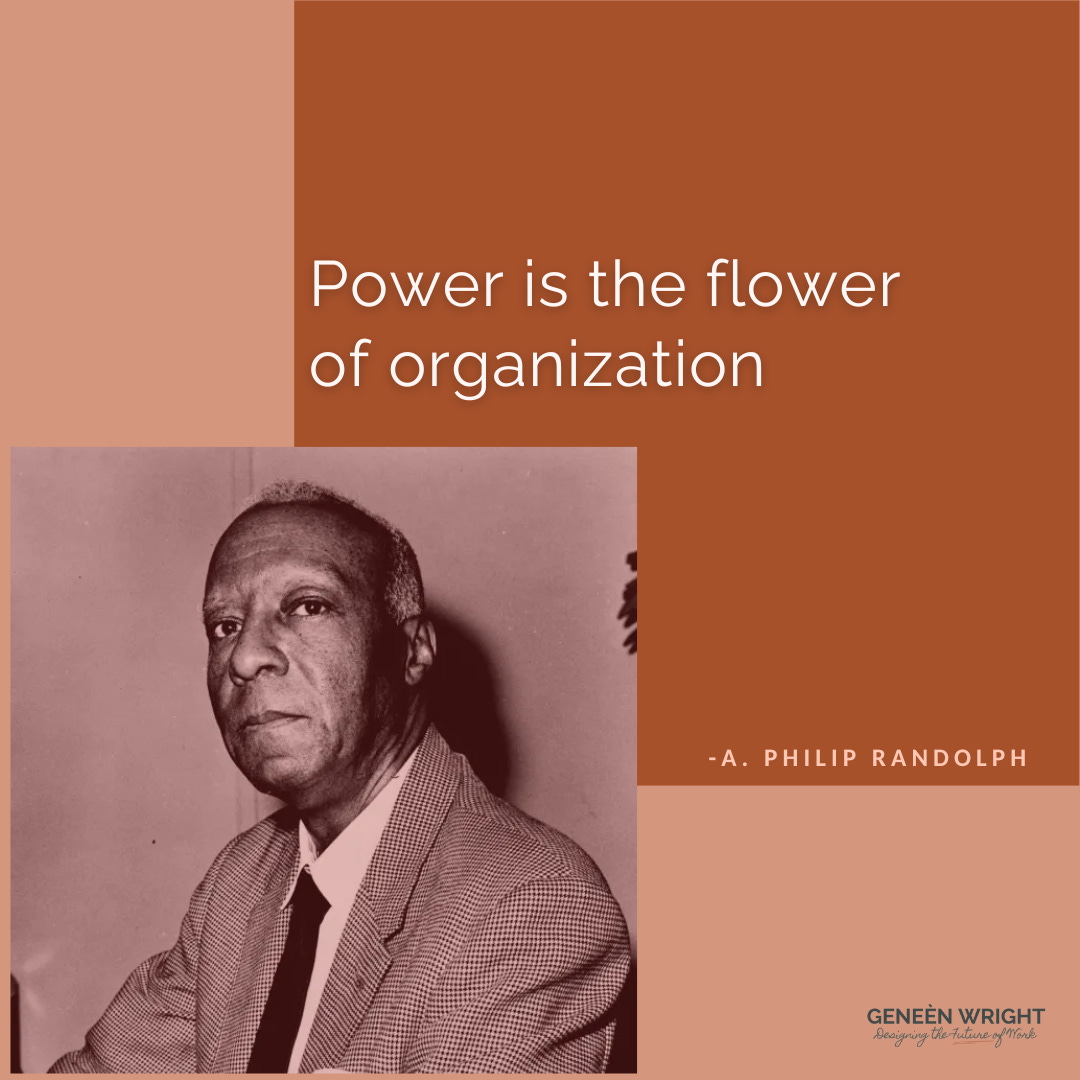
His patience became a blueprint, one that still challenges modern leaders to build deliberately, not reactively.
Three Clear Takeaways on the Randolph Way
So what did Randolph understand that others missed? Beyond understanding his position as a Black leader navigating and applying pressure to an existing system, he applied three clear strategic principles that can be applied today:
Principle One: Strategy Before Stimulus
Randolph distinguished between reaction and response. He faced attacks constantly. The difference? He had a strategy that existed before the attack. When Pullman fired organizers, Randolph didn’t call an emergency strike. He documented every firing. He built legal cases. He used each incident as proof of the need for federal protection.
For you, right now, the market is going to test you. Your company announces a reorganization that eliminates your department. A major client takes their business to a competitor. Your industry faces regulatory changes that make your current business model obsolete.
The reactionary move is to immediately panic-apply to fifty of the same type of job, rage against the machine on socials, or in your communities about the injustice of it all.
Here’s what strategic response looks like: you pause. You assess whether this disruption is actually changing your direction or simply accelerating your timeline. You use this moment as data to inform your next move, not dictate it.
Principle Two: Architecture Over Activity
What you’re NOT building while you’re reacting derails you from creating what is actually yours. Every hour spent consuming anxiety about market changes is an hour not spent building your framework. Randolph’s critics spent years trying to force immediate action. He spent those same years building alliances, legal defense funds, and political relationships.
This same distinction shows up in how you respond to disruption today. When the market shifts, you have a choice: respond to the moment or build for what comes after.
One is responsive: “I learned Python because AI is hot.”
One is structural: “I’m building a framework for how my industry integrates AI ethically. Python is one tool in that structure.”
Responsive reacts to the market while structural designs your space within the market.
Principle Three: Single Goal Clarity
Randolph had absolute clarity of focus. Get federal recognition for the Brotherhood. Everything else—every firing, every insult, every competing organizer promising faster results—was part of a bigger mission, not a distraction from it. That singular focus allowed him to turn obstacles into evidence, setbacks into strategy, and a twelve-year journey into a movement that changed America.
The Questions That Matter
While AI continues to develop, you develop alongside it—building your framework for how it applies to your domain. While others pivot constantly, you deepen the expertise that will matter as the dust settles.
So what’s your single goal right now? Not your five-year plan with seventeen contingencies. Your single goal.
What are you architecting that the market will eventually need to respond to?
What will you build that promotes your continuous growth?
What can you create that turns disruption into elevation?
Randolph spent the Depression years building alliances. When prosperity returned, he had a network. Your move? Go deep instead of broad. Build something specific and structural instead of something reactive and ostentatiously visible.
The Objection (And the Answer)
Now I know what you might be thinking. “Randolph had twelve years. I’ve got a mortgage and the tech sector is imploding.”
Fair.
But history has revealed that in organizational disruption, your opportunity is to build. I’m not saying ignore market realities or that you shouldn’t take necessary action. Strategic patience is not paralysis. It’s power.
The twelve-year strike worked because it wasn’t really a strike. It was a cathedral being built, one quiet brick at a time.
What’s your cathedral?
For more about A. Philip Randolph and the Brotherhood of Sleeping Car Porters, see the references below. If this resonated with you, share it with a leader who needs to hear this right now.
References & Further Reading:
Primary Historical Sources:
Railway Labor Act of 1926 (45 U.S.C. § 151)
Executive Order 8802, June 25, 1941 (Prohibition of Discrimination in the Defense Industry)
Bates, Beth Tompkins. Pullman Porters and the Rise of Protest Politics in Black America, 1925-1945. University of North Carolina Press, 2001.
Pfeffer, Paula F. A. Philip Randolph, Pioneer of the Civil Rights Movement. Louisiana State University Press, 1990.
Martin Luther King Jr. Quote: King, Martin Luther Jr. Speech at the AFL-CIO Fourth Constitutional Convention, December 11, 1961. [”Randolph was] “truly the Dean of Negro leaders.”
Pullman Strike of 1894: Papke, David Ray. The Pullman Case: The Clash of Labor and Capital in Industrial America. University Press of Kansas, 1999.
Contemporary Labor Market Data: Layoffs.fyi. Tech Layoff Tracker, 2022-2023.
https://layoffs.fyi
Challenger, Gray & Christmas, Inc. Job Cuts Reports, 2022-2023.
Brotherhood of Sleeping Car Porters Archives: Library of Congress, Manuscript Division. A. Philip Randolph Papers and Brotherhood of Sleeping Car Porters Records.