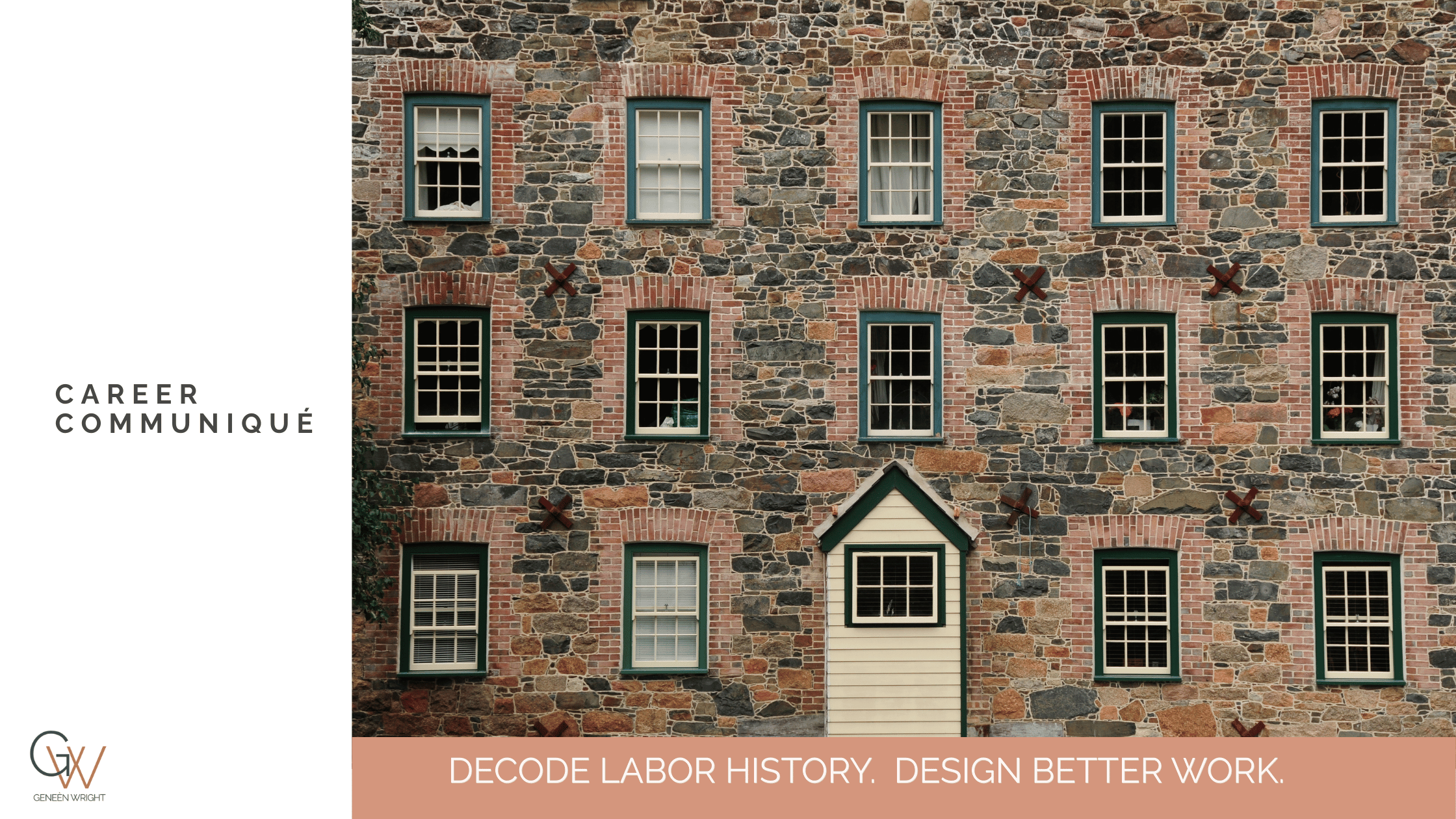
The Architecture of Discipline
From Workhouse to Gig Economy
She does not argue when they take her children, but she reaches for them anyway.
The matron does not need to raise her voice. She simply steps between them, and that is enough. Her daughter is taken in one direction, and her son the another. The mother watches until the corridor closes around them, and then she is alone in a crowd of women who have all watched the same scene unfold.
The building smells of boiled oats and damp wool and a bleakness so specific it could be catalogued, the kind that seeps into stone when suffering becomes routine. Conversation is minimal. The order of the place does not require instruction. It simply presses down.
She may have come to the workhouse for shelter, but she is being served correction.
In 1834, Britain reorganized poor relief under the Poor Law Amendment Act. Aid would no longer be loosely distributed through parish networks but would be centralized, regulated, and deliberately uncomfortable. Conditions inside had to be harsher than the lowest paid labor outside, because relief had to deter.
The principle was called less eligibility: assistance could never be more appealing than work, and dependence would carry consequence. Poverty was not only viewed as hardship but ultimately something that required correction.

The Settlement
The New Deal attempted a different approach to economic hardship. Unemployment insurance buffered downturns, employer-sponsored health coverage linked medical security to steady payroll, and collective bargaining translated productivity gains into wage growth. The arrangement was imperfect and often exclusionary, but it rested on a clear premise: contribution equaled continuity.
Since the late 1970s, that link has weakened. Productivity in the United States has risen far faster than typical worker compensation, so the economy has grown more efficient, but the benefits of that efficiency have not been evenly distributed. At the same time, income volatility has increased for many households, particularly those in lower- and middle-wage jobs. A growing share of workers now rely on contract, freelance, or platform-based income for part or all of their earnings, shifting more of the risk of fluctuating demand onto individuals rather than institutions.
Housing has moved on a similar trajectory. In many metropolitan areas, rents have increased substantially faster than wages, and nearly half of renter households now spend more than thirty percent of their income on housing. Health coverage remains tied to employment, yet medical costs continue to strain household finances even among those who are insured.
None of these changes arrived with a single announcement. They accumulated.
Today, stability is less embedded in employment itself. Income fluctuates. Benefits detach from payroll. Housing costs rise independently of wages, and health coverage remains tethered to uninterrupted work in an economy increasingly defined by interruption.
Before Sunrise
She places her sleeping child into the car before sunrise. The first shift is deliveries, mapped and queued before the school doors open. After drop-off, she switches to ride-share, working the morning commute until demand thins. The rhythm is hers, but the margin is not.
Her earnings depend on algorithmic assignments, demand spikes, and fuel prices she cannot control. She carries the cost of her vehicle, her insurance, her downtime. Rent consumes most of what she makes, and one unexpected expense (a repair, a medical bill, a slow week) collapses the month.
No government statistic accounts for her. No institution tracks what she carries. She does not appear in the labor data as a problem to be solved, because she is working, and working is the point. She is doing what survival requires.
Her life follows the pattern of disciplined poverty. The system does not need to announce itself or threaten or confine. It only needs to ensure that any alternative remains unavailable.
Without Walls
Victorian Britain built walls to discipline poverty. We stopped building walls. We built instability instead, and called it opportunity.
The doctrine was explicit then: assistance must never be more comfortable than work. There is no such declaration today. No law requires that survival be difficult. But when rent outpaces wages, health coverage depends on uninterrupted employment, and a single missed week threatens the month, the message lands without needing to be spoken.
The mechanism changed, but the sorting function remains.
The question now is how much financial pressure a working population can absorb before the economy works for everyone except the people running it.
When that pressure becomes ordinary, history tells us it does not stay quiet. It builds, forcing a reckoning.
We may not build workhouses anymore. But the architecture of discipline has not disappeared. It has evolved.
Suggested Readings
The following works informed the historical and economic context of this essay.
Workhouses and the Philosophy of “Less Eligibility”
Peter Higginbotham – The Workhouse: The People, The Places, The Life Behind Closed Doors
A detailed history of Victorian workhouses and the Poor Law system, including how the principle of “less eligibility” shaped the design and operation of these institutions.
Gertrude Himmelfarb – Poverty and Compassion: The Moral Imagination of the Late Victorians
Explores the moral framework that shaped nineteenth-century attitudes toward poverty, responsibility, and social support.
The New Deal Settlement and Mid-Century Stability
Ira Katznelson – Fear Itself: The New Deal and the Origins of Our Time
A history of the New Deal that explains how unemployment insurance, labor protections, and social policy reshaped the relationship between work and economic security.
Theda Skocpol – Protecting Soldiers and Mothers
A foundational study of how American social policy developed and the political coalitions that shaped welfare institutions.
The Erosion of the Postwar Labor Settlement
Economic Policy Institute – “The Productivity–Pay Gap”
Research documenting the growing divergence between worker productivity and typical compensation in the United States since the late 1970s.
David Weil – The Fissured Workplace
Explains how modern corporations have increasingly shifted employment responsibilities and economic risk onto subcontractors, contractors, and gig workers.
Housing, Financial Fragility, and Modern Precarity
Federal Reserve – Report on the Economic Well-Being of U.S. Households
Annual survey examining income volatility, emergency savings, and household financial stability.
Harvard Joint Center for Housing Studies – The State of the Nation’s Housing
Comprehensive analysis of housing affordability and rent burden trends across the United States.


