Reading the Will
Your Power in the Systems You Navigate
A Revisit
The final days before the April 1st launch of The Modern Manager™ System have been consuming, clarifying, and honestly a little humbling. In the middle of building something designed to help people lead with more intention, you find yourself being asked the same questions you put to others. This piece is a revisit to where I started Career Communiqué 7 months ago…
The Hand You Don't See Is Yours
The piece I published on soft skills in a time of harsh words opened a door to a myriad of thoughts: the question was never only about why toxic leaders rise, but the deeper and more urgent question as to why the rest of us let them, and why we so rarely recognize our own hand in the system we claim to be victims of. Power is not only something held over you. It is something you exercise, surrender, negotiate, and sometimes abandon entirely without ever acknowledging the transaction you just made. The pattern of complicity is just as legible as the pattern of dominance, and until you can read both, you are navigating blind. Or maybe you are chasing something green.
From Money Came Grief
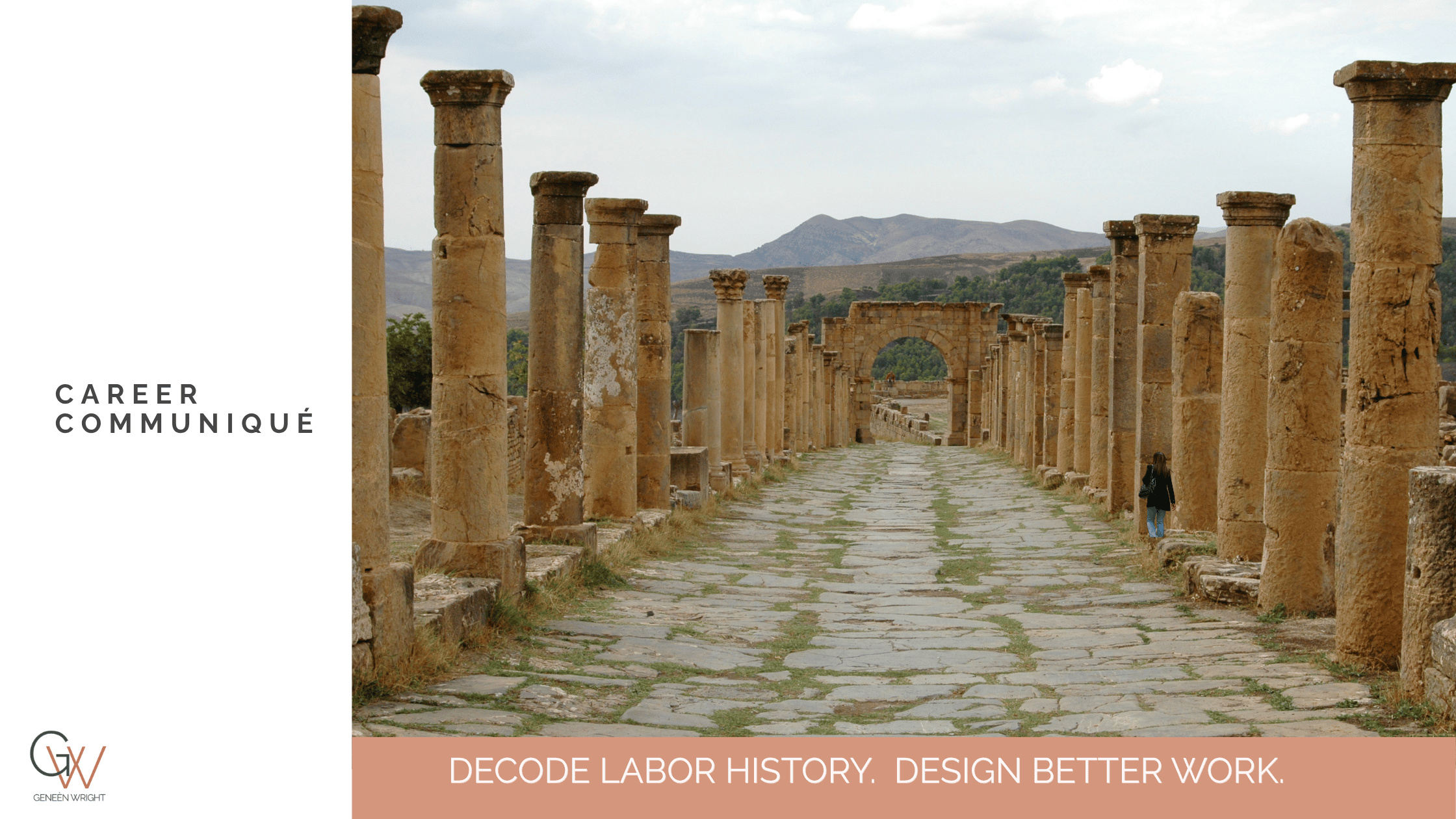
Plutarch records a moment in the aftermath of Caesar’s assassination when Caesar’s will was read aloud and the Roman citizens learned he had left each of them seventy-five drachmas and his private gardens beyond the Tiber for public use. From money came grief. The whole city was overtaken by a remarkable affection for Caesar because it was in that moment that they personalized his death. The conspirators had assumed the logic of their argument would carry the day; however, they miscalculated because they did not understand that most people do not evaluate power in the abstract. They evaluate it in terms of what it delivers to them, and they mourn its loss only once the benefits stop arriving. This historical anecdote still applies today. Think of the moment you realize the leader you tolerated, defended, or quietly enabled has moved on, and you are left dealing with the consequences.
Name It Or Knock It
You cannot interrupt what you cannot see.
Pattern Literacy exists precisely to interrupt the fallout cycle, and that interruption begins with naming your pattern and carries through with how your pattern behaves inside the system you are navigating. Every organization has a recognizable architecture: who holds information and who distributes it, who takes risk and who absorbs it, whose voice gets amplified and whose gets translated, softened, or ignored entirely. These are not personality quirks operating independently of one another. They are patterns in dynamic relationship, adjusting and responding to the patterns around them, and they are running whether or not anyone in the room has named them. For example, the Architect builds systems that outlast the room, but inside an organization where the Gatekeeper controls access as a form of currency, the Architect’s instinct to build openly becomes the very thing that gets blocked. There is a gate, and the Gatekeeper holds the key, and if you have not recognized that dynamic for what it is, you will spend considerable energy knocking on a door that was never going to open for you.
Build The Catapult
Pattern recognition is what allows the Architect to stop knocking and start building the catapult. That is where sub-patterns become relevant, the secondary behavioral repertoire within your primary pattern that you can deliberately invoke when your default approach meets a specific kind of resistance. The Architect who reads a Gatekeeper environment does not abandon their pattern; they reach for the Narrator’s capacity to frame a compelling case publicly, or the Navigator’s capacity to hold a longer timeline and find the route that does not require the gate at all. That is pattern recognition operating as strategy, and it is the prerequisite for every meaningful decision you will make about where to spend your energy, whose leadership to invest in, and what you are agreeing to when you say yes.
The Ulcer Is Data
So, I am asking loud enough for the people in the back: what are you exchanging, and at what cost? The professional chasing the title while scheduling a gastroenterology appointment for the third time this year deserves an honest accounting. The ulcer is data. The way you have slowly stopped saying what you actually think in meetings because you have learned which opinions are safe is data. None of it is weakness, and none of it is permanent, but all of it is information about the gap between the pattern you are performing and the pattern the system requires to exist, thrive, and achieve within. That gap is where the cost lives, and naming it is the first move toward deciding whether the exchange is still worth it. Organizations reward performance, and performance is not the same thing as you. Your value, what you do, what you bring, and the particular way you bring it, exists independent of whether the system you are currently inside has the capacity to recognize it. Knowing that distinction is not pessimism. It is the clearest form of self-awareness available, and it is the foundation on which every other leadership capacity gets built.
Live By Your Own Will
Understand this: the argument for knowing your pattern is not soft, soapy, or sentimental. It is real in the fullest sense. You cannot lead from a position you do not understand. You cannot negotiate terms you have never articulated, even to yourself. And you cannot build anything that lasts if the foundation is a bargain, you made unconsciously, trading your judgment for proximity, your integrity for inclusion, your health for a title that will not follow you into the next chapter. Plutarch’s Roman citizens grieved Caesar when the will was read because someone finally named what they stood to lose. You do not have to wait for that moment. The work of pattern literacy is knowing and living according to your own will before someone else has the power to dictate it to you.
Geneèn Wright is a Workforce Strategist and Organizational Anthropologist. She is the founder of Geneèn Wright HQ and the author of Career Communiqué, a publication on labor history, work, and the patterns that evolve us.


