Justification, Masked as Manifesto
Machiavelli, extraction, and the leadership patterns we still operate inside.
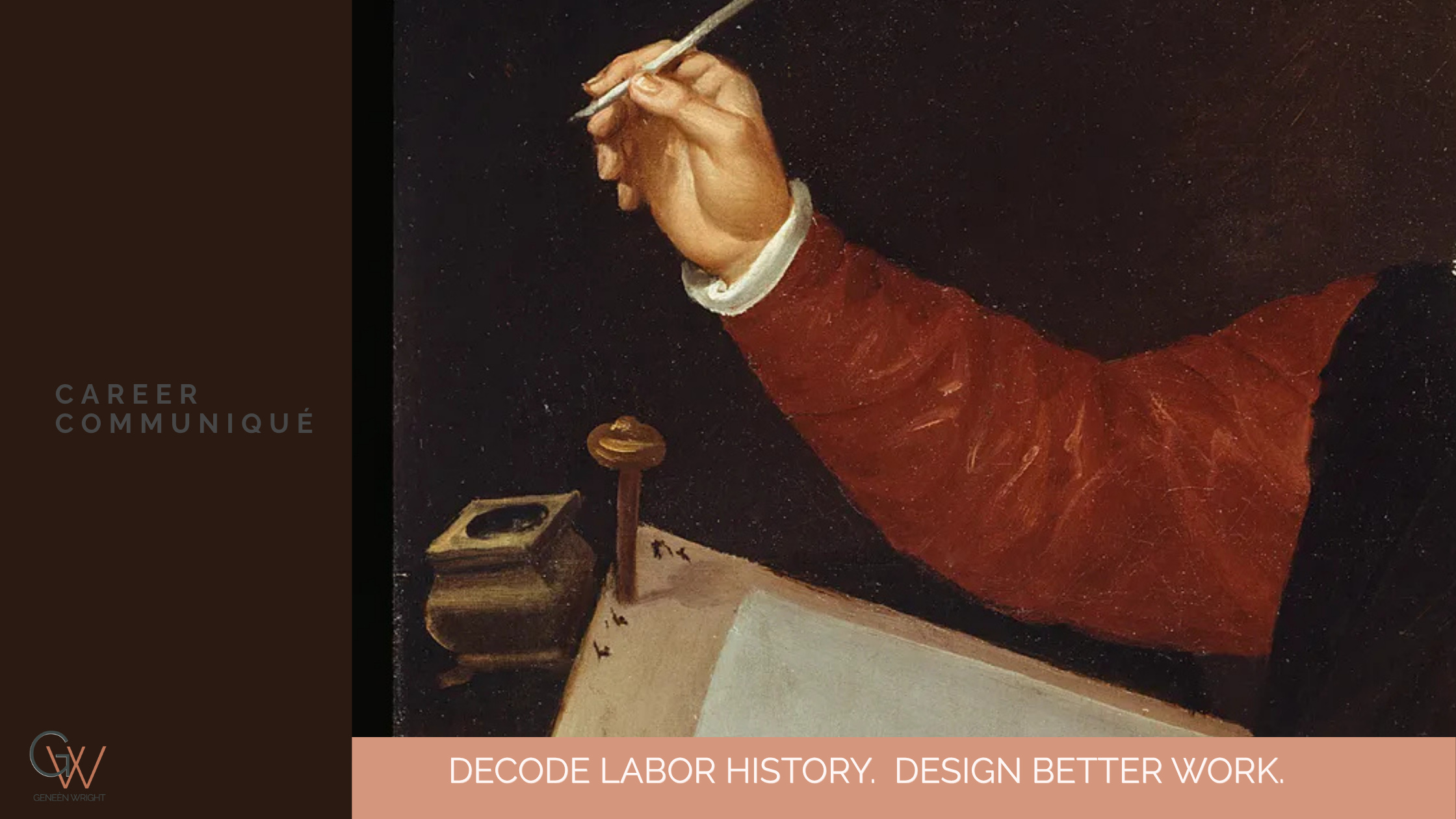
Florence, 1513. Niccolò Machiavelli sits down to write after removing the mud-caked clothes of a man who has been farming badly all day and putting on his “regal and courtly garments.” He is, in effect, ritualizing his desire to re-enter a system that kicked him to the farm…literally.
He describes these writing sessions to a friend from a farmhouse in Sant’Andrea in Percussina, a village so unremarkable that history has recorded almost nothing about it except that Machiavelli was briefly forced to live there. By this point, the Medicis had stripped him of his post as Second Chancellor of the Florentine Republic, imprisoned and tortured him before releasing him into an exile that was, by his own account, neither dignified nor comfortable. And yet each night, he puts the system back on. He dresses, sits, and writes a justification masked as a manifesto.
The Prince arrived into a world already organized around a principle so embedded it had stopped being visible: some people extract, and everyone else produces. Renaissance Florence was not feudal in the traditional sense, but it operated on a similar logic. Its audience were governing — managing estates, courts, armies, and financial networks built on the labor of people who had limited alternatives. Systems sustain themselves by keeping people busy enough not to question the conditions shaping their lives
Because busy people rarely stop to interrogate the system constraining their options. They are too occupied working within it to step outside of it.
To summarize The Prince plainly: the appearance of virtue stabilizes power more effectively than virtue itself, and the leader willing to act outside accepted bounds is the one most capable of maintaining position. Not because these traits are admirable. Because they are functional inside a system where outcomes matter more than methods, and perception governs legitimacy.
Condemned by the Catholic Church, The Prince moved through courts and back channels the same way modern political frameworks circulate before formal adoption, discussed privately, and tested informally. You know, the same way Project 2025 circulated before becoming doctrine…right that pattern.
Listen, complacency does not always look like laziness. Sometimes it looks like a full calendar and an unexamined history. The system does not require its participants to defend it explicitly. It requires them to continue operating inside it, protecting perceived privilege. And over time, continuity begins to look like inheritance.
The Prince landed in that gap between busyness and heredity, and it has lived there ever since. Not because powerful people are uniquely cynical, but because the book arrived precisely when extraction needed an intellectual defense and delivered one in fewer than two hundred pages.

Its function is clear: justification masking as a mission statement.
The conditions it describes have not fundamentally changed. Fast forward to today and The Prince has permeated boardrooms and C-suites alike. Perhaps not overtly, but the systemic makeup built into the relationship between capital and labor demands examination, particularly if we want to understand why the tyrannically ruthless leader is championed or tolerated even when their success is suspect.
This series examines how anti-hero leadership is not an anomaly, but an outcome, produced and sustained by the very systems organizations rely on to operate.
Have you ever worked for a leader who remained in power long after the numbers, the culture, and the outcomes stopped supporting their tenure? The leader who lies directly in the face of evidence? The one whose authority persists even as their effectiveness declines?
The names and industries will change across each piece, but the underlying pattern will not. By the end, I want you to be able to see it operating in real time. Not just in history, but in the rooms we all sit in right now.
More next Sunday.
If you want to understand the pattern before the next issue lands, The Modern Manager is where that work begins.
Reading history is one thing. Knowing how to position yourself inside the structures it built is another. The Modern Manager System is designed for that second move. It is a methodology grounded in labor history, organizational pattern recognition, and applied leadership design. I built it to help you read the institution you are operating inside and keep you from performing. It is the difference from being your own court ambassador and the court jester.
Pattern Literacy membership gives you access to the Leadership Patterns Field Guide, the Career Compass assessments, and the Modern Manager Workbook. If you have been in a room with a difficult leader and could not name what you were watching, this is where you start.


