


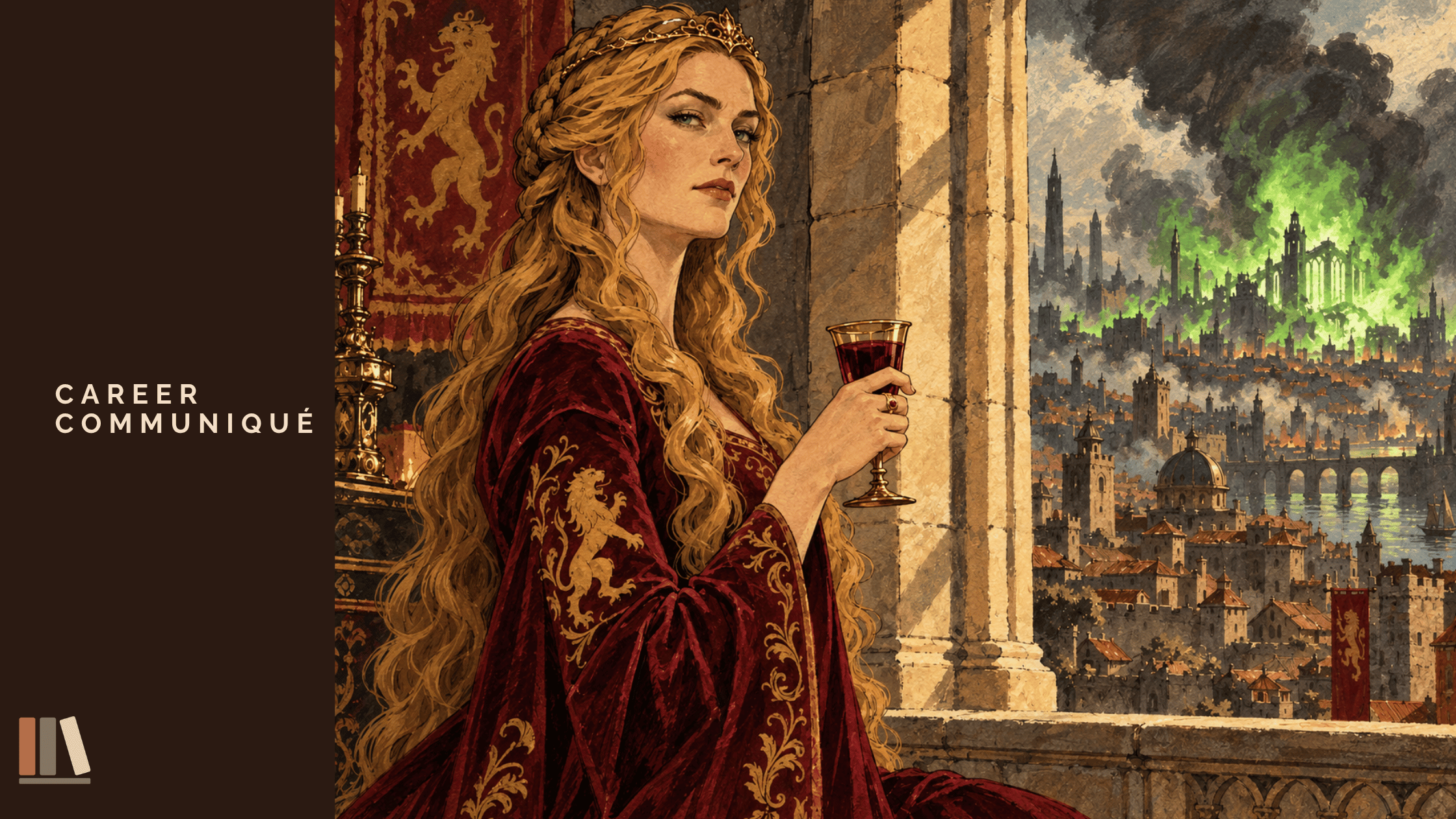
The stacked wildfire glows beneath the Great Sept of Baelor, waiting to be detonated by the candlelight. Just above this cellar of doom, the High Sparrow, grungier than ever, has assembled Cersei’s trial. Her absence is suspicious to us, the viewer, and to Margaery Tyrell, who is in attendance along with her brother, her father, the Faith Militant, and hundreds of minor lords, ladies, and commoners, all of whom filled the Great Sept to witness the queen mother answer for her sins. When the wildfire ignites they all perish. And, the history of Westeros is changed faster than Cersei, watching from a window in the Red Keep, can sip from her wine goblet.
That season 6 finale takes me out every time I see it. I know what is coming, and I still dissect every power exchange and pattern flow that precedes it, because the doom is inevitable on screen and legible long before the fuse.
This week my historical gaze turns toward fiction, never too far from historical sight, since George R.R. Martin built Westeros on the bones of the Wars of the Roses. Game of Thrones offers a particularly vivid opportunity to consider leadership and how power moves in practice. So, as I watch, I ponder the characters’ peril through a Pattern Literacy lens.
A leadership pattern describes a recurring way someone exercises influence, organizes work, or responds to pressure. A leadership pattern’s usefulness depends on the conditions around it, the other patterns at play, and the counterweights holding a pattern in place. Under pressure, a pattern can overextend from strength into drift and, without correction, eventually into shadow. So, Pattern Literacy means recognizing those conditions, the moves, and the pressure early enough to act.
Which brings me to the question I keep returning to as I watch Westeros burn: what if there was a system capable of checking their shenanigans?
Part of my Leadership Patterns framework is the counterweight, a pattern installed to check another before it tips into its shadow, applied through the leader’s own practice or by people and institutions with the standing to correct. Counterweights hold in one of three conditions: Unchecked, where nothing can correct the leader; Advisory, where correction is available and easy to ignore; and Accountable, where correction can change what happens next.
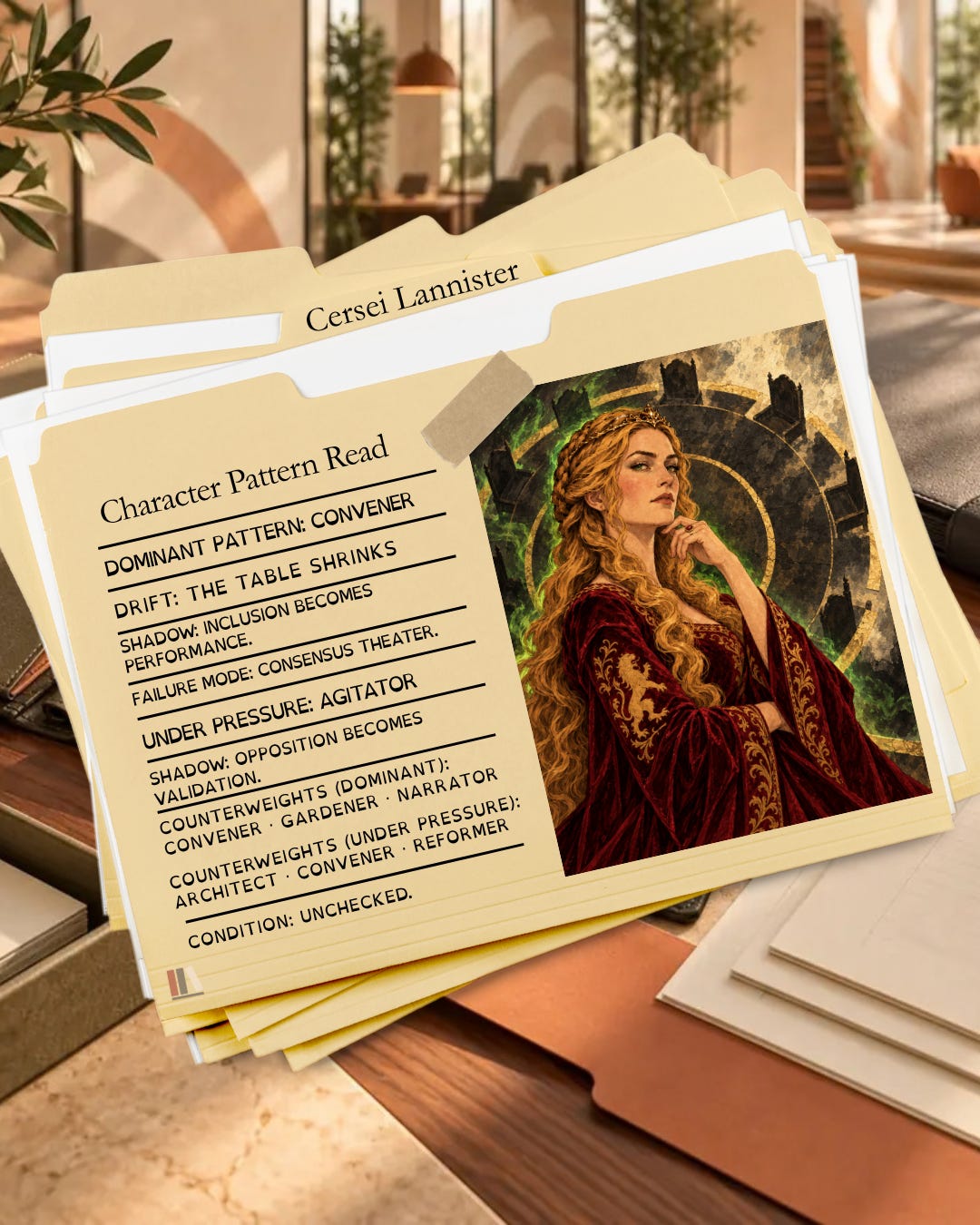
Cersei runs what I call the Convener pattern, and at its strength, Convener gathers the right people around a decision. Her alliance with the High Sparrow shows the machinery at work. She reads what the Faith wants, restores the Faith Militant, and points its authority at a shared rival, the Tyrells. Look closer and she is aiming one counterweight at another: Margaery, running Convener, and the High Sparrow, running Narrator, are two of the few leaders in King’s Landing with the standing to check her. The coalition she arms is the same one that will eventually put her on trial.
From there, Cersei demonstrates what happens when a leader dismantles council until only ceremony remains. Cersei’s drift is deliberate consolidation. She shrinks the table into what I call the “Cersei circle,” one that fits inside her own trust and holds only people whose usefulness depends on their willingness to carry out her will. That is Convener in shadow, and its failure mode: Consensus Theater.
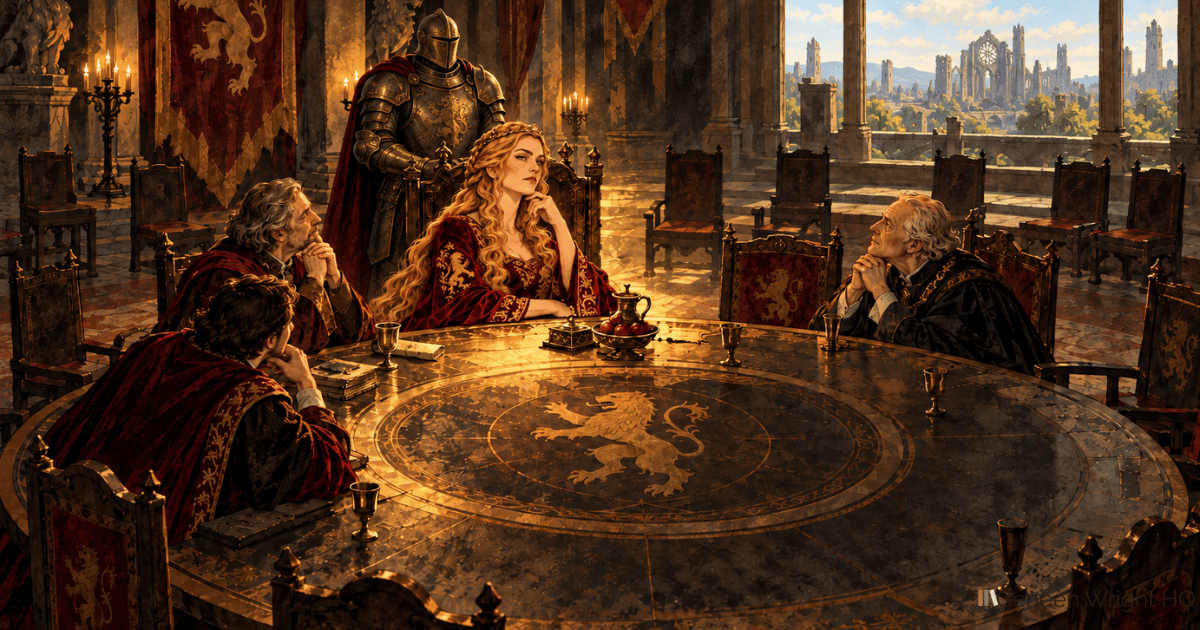
Now let’s talk about what happens when the pressure kicks in. When the High Sparrow puts her on trial after walking her through the streets of King’s Landing, that pressure brings her secondary pattern to the surface. Cersei runs Agitator, and its shadow fits her like a crown. Pressure becomes identity and every opponent becomes validation, so the Tyrells, the Faith, and anyone outside the Cersei circle register as enemies whose mere existence proves she is right. Convener is one of the patterns meant to counterweight Agitator, and hers had already shrunk into a circle that agreed with her on all things mayhem.
Her destruction of the Great Sept is Agitator’s failure mode at full expression: Institutional Hollowing. In a single sip, she destroys the Faith’s leadership and House Tyrell’s heirs, removing two powerful external checks on her authority. Sure, the immediate victory was decisive, but the consequences extend well beyond the opponents she intended to remove. Compounding the tragedy, her son watches the smoke rise from his window and then steps out of it to his death below.
Cersei also loses or pushes away those who can challenge her (ahem, Tywin, Tyrion, and eventually Jaime), and fills the space with yes-men and a Frankenstein of living warfare.
At work, this pattern can appear in the leader who repeatedly excludes colleagues because they “slow things down.” Read that workplace. Who can question the leader’s assumptions? Who sees the consequences? Who can bring back information that changes the plan? Then watch what happens when that leader comes under pressure, as critics become enemies and the exclusions arrive faster. If speed consistently requires removing the people who ask the strategic questions, the organization is building a system with fewer witnesses and even fewer opportunities for correction. And that organization’s danger zone? Yes-men, and Frankensteined tech and systems that execute without asking a single question.
So look at your own table. Who in your organization has a Cersei circle, and who is still allowed to sit in it?
Next week’s installment: Littlefinger and the Architect pattern, keeping the blueprints.
In the meantime, if you want to know which condition your own organization is operating in, start with the Counterweight Audit. It takes eight questions and about two minutes to show whether your counterweights are Unchecked, Advisory, or Accountable. For the full set of patterns and their counterweights, the working glossary is your reference. If you want to keep building the practice, The Modern Manager Method™ takes these patterns off the page and into your own workplace.